
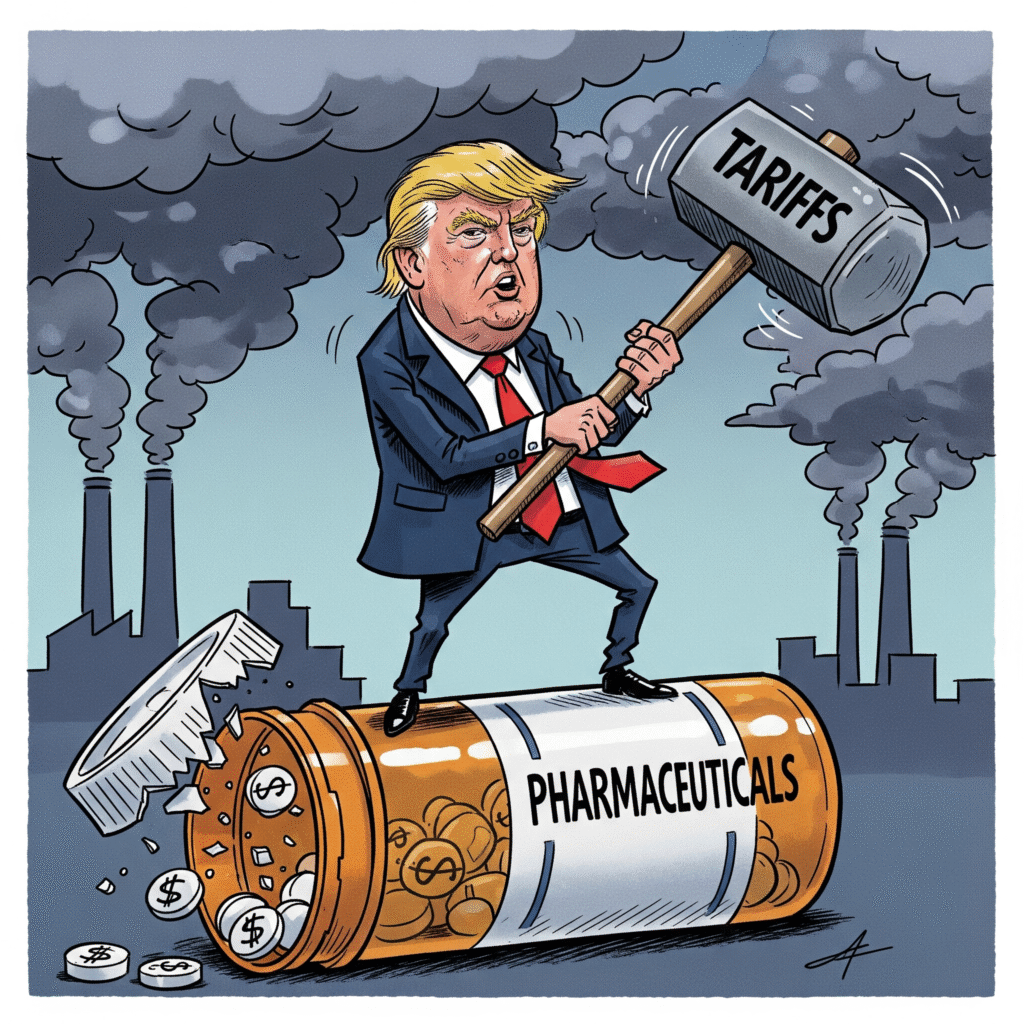
The U.S. political and economic landscape has shifted again with President Donald Trump’s latest announcement: a 100% tariff on branded and patented pharmaceutical drugs imported into the United States. The policy, set to take effect on October 1, 2025, has triggered immediate reactions from global markets, pharmaceutical companies, and trade analysts.
In this blog, we’ll break down what Trump pharma tariffs mean, how the industry is reacting, and what investors should watch.
🔍 Trump Pharma Tariffs Breakdown
- Who is affected? The tariff targets foreign-made branded and patented drugs. Generic medicines are not the main focus of this policy.
- Exemptions: Drugmakers with ongoing or newly initiated U.S. manufacturing projects may avoid tariffs. This exemption is seen as a push to localize pharmaceutical production.
- Policy rationale: The administration cites the need to reduce reliance on foreign drug imports, cut healthcare costs, and boost domestic jobs.
📉 Trump Pharma Tariffs and Immediate Market Impact
- Stock Market Reaction: Shares of major Asian and European pharmaceutical firms dropped sharply after the announcement, reflecting fears of reduced U.S. market access.
- Currency Pressure: European currencies saw volatility, with concerns about export losses from the pharmaceutical sector.
- Investor Sentiment: While Big Pharma with U.S. operations (like Roche and Novartis) remain relatively insulated, smaller firms without a U.S. footprint could suffer steep revenue hits.
🏭 Pharma Industry Responses to Trump Tariffs
- Eli Lilly recently announced a $5 billion investment in a new Virginia manufacturing plant, signaling preparation for U.S. localization.
- Roche and Novartis emphasized their existing American operations, reassuring investors that they expect minimal disruption.
- AstraZeneca took a different approach, announcing steep direct-to-patient discounts in the U.S., cutting prices by up to 70% on certain drugs.
These moves highlight a trend: pharmaceutical companies are adapting quickly, either by investing in U.S. infrastructure or by restructuring pricing strategies.
🌎 Global Trade Implications of Trump Pharma Tariffs
- Europe’s reaction: The EU is expected to challenge these tariffs, arguing they may violate trade agreements and WTO rules.
- India’s position: India, a top supplier of generic drugs, may be less affected since generics are not the primary target. However, Indian pharma firms with patented drug lines could face headwinds.
- Potential retaliation: Other countries may respond with tariffs on U.S. goods, raising concerns of a broader trade conflict.
💊 Impact of Trump Pharma Tariffs on U.S. Consumers
While the Trump administration argues that this policy will lower U.S. drug costs by encouraging domestic production, there are real risks of short-term price increases and drug shortages during the transition. Consumers may also see reduced access to certain imported drugs until domestic supply catches up.
📈 What Investors Should Watch in Trump Pharma Tariffs
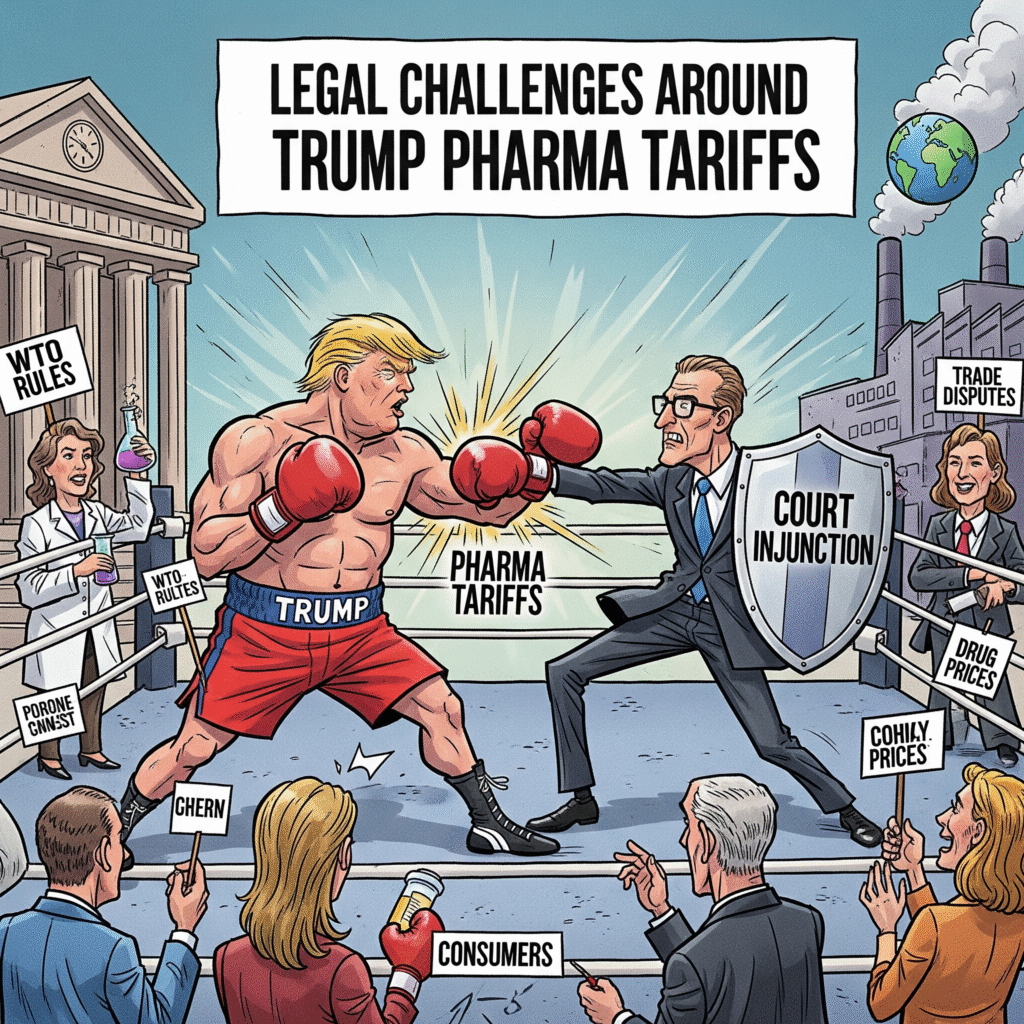
- Pharma Supply Chains: Track which companies are investing in U.S. facilities—these firms may outperform peers.
- Healthcare Sector ETFs: Expect volatility; funds with higher exposure to European or Asian pharma stocks could see more downside.
- U.S. Generics: Domestic generic drugmakers may benefit as competition from foreign patented drugs weakens.
- Global Trade Relations: Any retaliation from trading partners could spill over into other sectors like autos, tech, or agriculture.
⚖️ Legal Challenges Around Trump Pharma Tariffs
Trade experts warn that the 100% tariff could face challenges under WTO rules and U.S. trade law. Legal disputes may drag on, but in the meantime, the policy will reshape how global drugmakers allocate capital and supply chains.
📊 Final Thoughts on Trump Pharma Tariffs
Trump’s tariff on pharmaceuticals is not just an economic move—it’s a strategic reshaping of the global drug industry. For investors, the short-term may bring volatility, but longer-term opportunities exist in:
- U.S.-based pharma expansions
- Domestic generics
- Supply chain technology supporting local drug manufacturing
As this policy unfolds, financial markets will closely watch how global pharma adapts and whether trade tensions escalate. Investors should stay informed, hedge against volatility, and position themselves in sectors most likely to benefit from this major policy shift.
💡 Pro Tip for Investors: Keep an eye on corporate announcements about new U.S. pharma plants. These moves will determine winners and losers in the next stage of the pharmaceutical trade war.
⚠️ Disclaimer
This blog is for informational and educational purposes only. It does not constitute financial, investment, or legal advice. Readers should conduct their own research and consult with licensed professionals before making any financial or investment decisions. The author and website are not responsible for any financial outcomes or losses resulting from reliance on this content.