
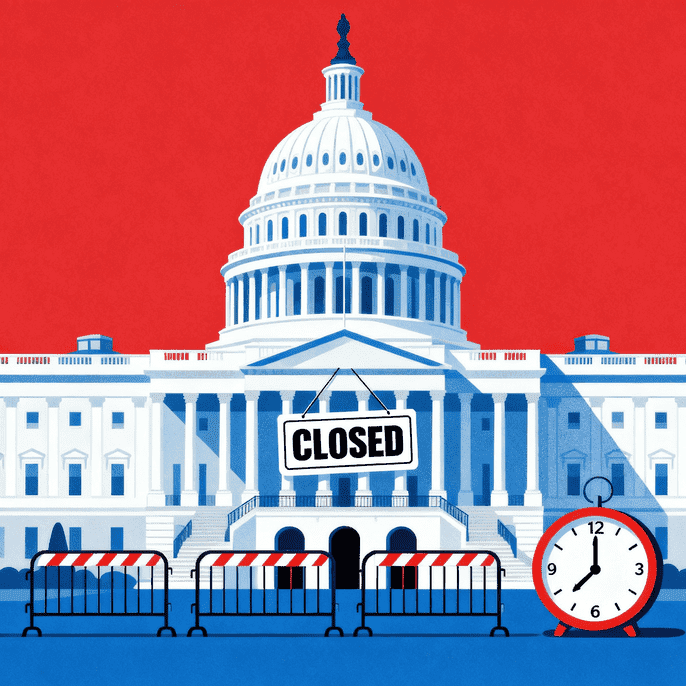
The US government shutdown has officially begun—the first in nearly seven years—after the Senate failed to pass a short-term funding bill in a 55–45 vote, falling short of the 60 votes required. At 12:01 a.m. local time, funding lapsed, forcing the White House Office of Management and Budget (OMB) to issue an urgent directive ordering agencies to execute shutdown contingency plans.
While essential services such as national security operations, NASA missions, immigration enforcement, and selected FDA/USDA activities remain operational, hundreds of thousands of federal employees now face furloughs or must work without pay until a deal is reached.
This article explores what triggered the shutdown, which services remain functional, who is directly impacted, the implications for financial markets, and what investors need to know going forward.
What Happened: The 55–45 Senate Vote
The Senate 55–45 vote on a Republican-backed stopgap bill marked the immediate trigger for the US government shutdown. The bill was intended to extend funding through November 21 but fell short of the 60-vote threshold.
The political deadlock centered around healthcare spending. Democrats rejected the proposal, arguing it underfunded critical healthcare subsidies and programs, while Republicans insisted on passing a temporary bill to keep the government running.
At 11:59 p.m., the OMB memo confirmed funding had expired, ordering federal agencies to activate shutdown protocols.
Historical Context: Shutdowns in US Politics
Since 1976, the US has experienced 21 shutdowns, each exposing deep political divisions:
- 1995–96 shutdowns: President Bill Clinton vs. House Republicans over budget priorities.
- 2013 shutdown: Affordable Care Act disputes under President Obama.
- 2018–2019 shutdown: The longest in US history (35 days), centered on border wall funding under Trump’s first term.
The 2025 US government shutdown highlights once again how partisan clashes over core policy issues—in this case, healthcare—can paralyze funding and governance.
What Remains Open: Essential Services Continue
Not all federal functions cease. Federal law ensures essential services tied to security, health, and safety remain operational:
- NASA operations: Mission-critical projects and satellite monitoring continue.
- Immigration enforcement: Border patrol and visa security remain active.
- Public health activities: FDA and USDA food safety inspections and urgent drug approvals continue.
- National security: Military and intelligence operations are fully staffed.
- Social Security & Medicare: Payments continue, though administrative assistance may slow.
By law, these areas are classified as essential services, meaning they cannot shut down even during funding lapses.
Who Is Affected: Furloughs and Service Closures
The US government shutdown impacts both federal employees and citizens who depend on public services.

- Furloughs: Hundreds of thousands of non-essential workers are temporarily laid off without pay.
- Essential workers unpaid: TSA, border patrol, and air traffic controllers must work without immediate pay.
- Public-facing delays: National parks, passport offices, and museums face closures or disruptions.
- Regulatory slowdowns: EPA inspections, FAA certifications, and IRS processing may be delayed.
This creates a ripple effect across communities, especially in regions reliant on federal contracting and tourism.
Market and Economy Lens
Shutdowns usually have minimal economic impact if brief, but extended ones disrupt growth and business sentiment.
- GDP drag: Each week of shutdown could shave 0.1–0.2% off GDP growth.
- Federal contractors: Payments may be delayed, affecting small and large firms alike.
- Consumer confidence: Declines as federal employees miss paychecks.
- Travel/tourism hit: TSA staffing shortages and national park closures hurt related industries.
Market Reactions
- Defense/aerospace: Sensitive to delayed contracts.
- Healthcare sector: Volatility rises due to the healthcare spending deadlock.
- Travel and leisure: Airlines and hotels may see revenue pressure.
- Safe havens: Gold, Treasuries, and defensive sectors often benefit from uncertainty.
Political Backdrop: Trump’s Second-Term Shutdown
This shutdown unfolds under President Donald Trump’s second term:
- Republicans: Push a clean stopgap bill.
- Democrats: Demand concessions on healthcare subsidies.
- Result: Gridlock, as bipartisan cooperation remains elusive.
The US government shutdown is now a flashpoint in political messaging, with both sides working to sway public opinion.
Investor Checklist: How to Navigate the Shutdown
Investors should manage exposure carefully:
- Liquidity Management: Prepare for delays in government-related receivables.
- Sector Watch: Monitor healthcare, travel, and federal contractors.
- Volatility Controls: Don’t overreact to daily headlines; keep a long-term view.
- Safe-Haven Assets: Consider gold and Treasuries if shutdown drags on.
Outlook: Path to Resolution
Possible outcomes include:
- Short-term bridge bill: A temporary fix that reopens government.
- Comprehensive deal: A bipartisan agreement on healthcare spending.
- Extended stalemate: A prolonged shutdown if no compromise is reached.
The OMB memo ensures agencies remain in contingency mode until new funding is approved.
Key Takeaways
- The US government shutdown began after a Senate 55–45 vote failed.
- Essential services like NASA operations and immigration enforcement continue.
- Federal employees face furloughs and unpaid work.
- The shutdown reflects a healthcare spending deadlock.
- Markets remain watchful of sector-specific risks.
FAQs
1. What triggered the 2025 US government shutdown?
The Senate vote failed at 55–45, with disputes over healthcare spending preventing the 60 votes needed.
2. Are Social Security and Medicare affected?
Payments continue, but administrative services may slow.
3. How does a shutdown affect federal employees?
Non-essential employees face furloughs, while essential staff work without pay until Congress restores funding.
4. What is the impact on markets?
Markets typically react to sector-specific risks—defense, healthcare, and travel—while safe-haven assets gain traction.
5. When will the shutdown end?
It depends on bipartisan negotiations and whether a compromise on healthcare spending emerges.
Disclaimer
This article is for informational purposes only and reflects current developments surrounding the US government shutdown. The content does not constitute financial, legal, or investment advice. Market conditions, political negotiations, and economic impacts may evolve rapidly, and actual outcomes may differ from the scenarios discussed here. Readers and investors are encouraged to consult qualified professionals before making financial or investment decisions.